
Top Solar Energy Companies in India (2026) | Sundesh
Introduction
India’s energy landscape is changing faster than at any point in its history. Solar capacity additions have broken records for three consecutive years, utility tariffs have touched new lows, and corporate buyers are signing power purchase agreements that would have seemed ambitious just five years ago. At the centre of this transformation are solar energy companies -engineering, procurement, and construction (EPC) specialists, independent power producers, and integrated solution providers -who are turning policy ambition into working gigawatts.
This article examines what separates the best solar energy companies in India from the rest, what services matter most to large energy buyers, and why 2026 is a pivotal year for organisations still sitting on the sidelines.
Why Solar Energy Has Become India’s Default Power Choice
India’s installed solar capacity crossed 100 GW in 2024 and is on course to reach 500 GW of renewables by 2030 under the National Electricity Plan. Several structural forces are sustaining this momentum:
- Falling levelised cost of energy (LCOE): Utility-scale solar tariffs in India now routinely come in below ₹2.50/kWh, undercutting new coal capacity.
- State renewable purchase obligations (RPOs): Distribution companies and large open-access consumers are legally required to source rising percentages from renewables.
- Corporate decarbonisation commitments: Multinational companies with India operations face scope-2 emissions targets that demand clean power procurement.
- Grid modernisation: Transmission and storage investments are reducing the intermittency barrier that once limited solar’s role in industrial supply.
What a Full-Service Solar Energy Company Actually Delivers: A genuine solar energy company does far more than sell panels. For industrial and commercial clients, the service stack typically includes:
1. Feasibility and Site Assessment
Before a single drawing is produced, a credible EPC partner will analyse solar irradiance data, grid connection feasibility, land title and regulatory status, shadow mapping, and soil bearing capacity. Skipping or skimping on this stage is the single biggest cause of project delays in India.
2. Engineering and Design
Optimal system design balances generation yield, equipment longevity, maintenance access, and grid compliance. Leading solar energy companies use simulation software such as PVsyst and AutoCAD-based 3D modelling to validate designs before ground is broken.
3. Procurement
Panels, inverters, mounting structures, cables, and SCADA systems must be sourced from bankable manufacturers whose equipment will perform reliably for 25 years. Experienced EPC firms maintain vetted supplier relationships and can leverage volume pricing unavailable to one-off buyers.
4. Construction and Commissioning
Civil works, electrical balance-of-plant, grid synchronisation, and performance testing all require experienced site management. In India, where monsoon windows, local labour availability, and DISCOM interconnection timelines create real scheduling risk, construction competence is a core differentiator.
5. Operations and Maintenance
A solar asset generating 10 MW will underperform its projected yield if monitoring, cleaning, inverter servicing, and vegetation management are neglected. The best solar energy companies offer long-term O&M contracts backed by performance guarantees and remote SCADA visibility.
Key Criteria for Evaluating a Solar Energy Company in India
With hundreds of firms claiming EPC capability, industrial and commercial buyers need a disciplined evaluation framework. Consider the following:
- Track record: Has the company commissioned projects of comparable scale and technology type? Ask for reference plants you can visit.
- Financial standing: An undercapitalised EPC contractor is a project risk. Review balance sheets and check for outstanding litigation.
- Bankability: Lenders and equity investors conduct their own technical due diligence. A company whose work consistently satisfies lender engineers commands a significant premium.
- Warranty and performance guarantees: Understand exactly what is guaranteed, for how long, and what recourse exists if targets are missed.
- Local presence: State-level regulatory knowledge, DISCOM relationships, and regional site teams reduce execution risk significantly.
The Role of Solar Energy Companies in India’s Industrial Transition
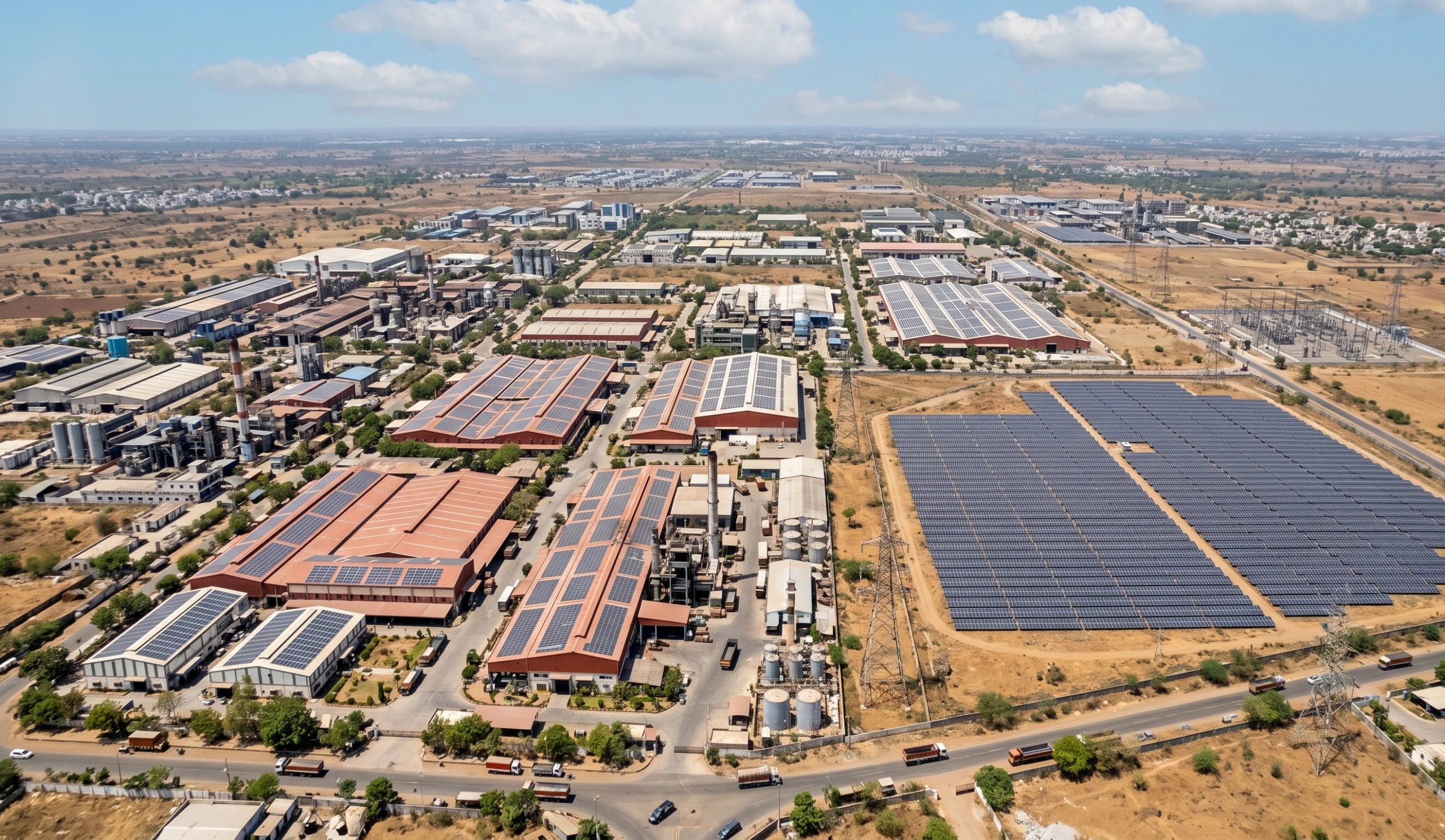
Heavy industries -steel, cement, chemicals, textiles -account for a large share of India’s commercial and industrial (C&I) power consumption. These sectors face twin pressures: rising grid tariffs and mounting ESG scrutiny from global customers and lenders. Solar energy, deployed either as rooftop, ground-mount open-access, or third-party PPA, offers a direct cost and carbon reduction pathway.
Sundesh has built its practice around exactly this intersection: combining EPC execution with structured energy procurement advisory to help industrial clients capture long-term tariff savings while meeting their sustainability commitments.
What to Expect From the Sector in 2026
The near-term outlook for solar energy companies in India is characterised by scale, complexity, and competition. Hybrid projects pairing solar with wind or storage are becoming the norm for round-the-clock supply. Green hydrogen ambitions are creating demand for ultra-large solar arrays. At the same time, supply chain localisation requirements under the Approved List of Models and Manufacturers (ALMM) are reshaping procurement strategies.
For buyers, this environment underscores the importance of choosing a solar energy company with genuine engineering depth, not just project aggregation capability.
Conclusion
India’s solar energy sector has moved well beyond early-adopter phase. The companies winning the most important projects today combine rigorous engineering, bankable track records, and the ability to structure deals that work for both the generator and the off-taker. Whether you are evaluating rooftop solar for a manufacturing facility, an open-access ground-mount for a large campus, or a long-term PPA arrangement, choosing the right solar energy company is the single most consequential decision in the process.
Sundesh brings end-to-end capability -from feasibility through O&M -backed by a portfolio of commissioned projects across India’s most demanding industrial sectors. Speak to our team to understand what is possible for your site and your energy budget.
FAQs
Can a solar energy company guarantee how much power my plant will generate?
Yes. Reputable solar EPC companies provide performance guarantees expressed as a minimum performance ratio (typically 78–82%) or a specific energy output in kWh/year. Contracts should specify measurement methodology and remedy — usually rectification or financial compensation — if the guarantee is not met.
Which states in India are most favourable for industrial solar projects?
Rajasthan, Gujarat, Maharashtra, Karnataka, and Andhra Pradesh consistently rank as the most favourable states due to high solar irradiance, established open-access frameworks, and reasonable wheeling and cross-subsidy charge structures. State-specific assessment is essential before committing to a project location.
How much does it cost to hire a solar energy company for an industrial project in India?
Turnkey EPC costs for industrial solar in India typically range from ₹3.5 crore to ₹5 crore per MW, depending on site location, technology specification, and grid connectivity requirements. Rooftop projects carry higher per-MW costs than equivalent ground-mount systems.
What is the difference between a solar EPC company and a solar developer?
A solar EPC company is contracted to engineer, procure, and construct a solar asset on behalf of a client who owns and finances the project. A solar developer finances the project itself and sells power to a buyer under a PPA. Many top firms in India offer both models.
How do I compare solar energy companies before hiring one?
Evaluate commissioned project portfolio (size and technology type), in-house engineering depth, equipment supplier relationships, financial standing, performance guarantees, and post-commissioning O&M capability. Ask for reference projects you can visit and verify independently.
What does a solar energy company in India actually do?
A solar energy company in India manages the full project lifecycle — from site feasibility and system design through equipment procurement, civil and electrical construction, grid commissioning, and long-term operations and maintenance. Leading companies also advise on open-access frameworks and PPA structures.